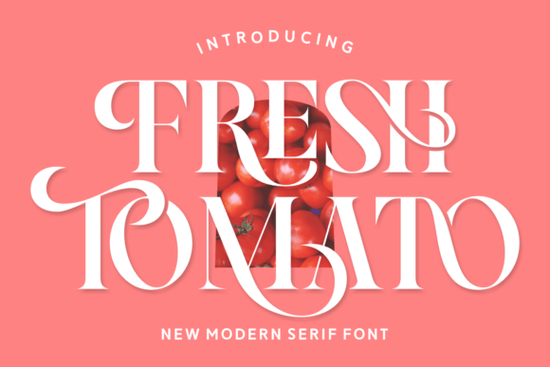
If you're looking for a serif font that feels both warm and modern something that works as well on a hand-lettered wedding invitation as it does on a playful T-shirt design the Fresh Tomato Font is worth your attention. It’s not overly ornate, but it carries quiet confidence: soft curves, balanced spacing, and just enough personality to stand out without shouting. Designed with real-world use in mind, it’s especially handy if you’re creating for print-on-demand shops, small-batch stationery, or local business branding where charm and clarity matter more than trend-chasing.
What makes Fresh Tomato Font work so well across different projects?
Unlike many decorative serifs that sacrifice readability for flair, Fresh Tomato keeps things legible at small sizes while still feeling expressive at larger ones. Its regular and italic variants pair naturally, and the included ligatures and alternate characters let you add subtle variation like swapping a standard “fi” for a connected version without needing extra design tools. That flexibility means you can use it for everything from product packaging labels to Instagram story text overlays, all while keeping a consistent visual voice.
It’s also multilingual, supporting Latin-based languages including Spanish, French, German, and Portuguese so if you’re designing for broader audiences or bilingual clients, you won’t hit character gaps mid-sentence. And because it’s built with clean vector outlines, it scales smoothly whether you’re printing on kraft paper or exporting for web use.
Where do designers actually use this font?
Here are a few everyday uses we’ve seen work well:
- Wedding stationery: The gentle rhythm of its letterforms adds sincerity to invitations and menus no need for heavy embellishment.
- Small business branding: Cafés, florists, and boutique skincare brands often choose it for logo lockups or packaging because it feels handmade but professional.
- Print-on-demand products: It reads clearly on mugs, tote bags, and greeting cards even when printed with basic DTG methods.
- Digital content: Blog headers, Canva templates, and social media graphics benefit from its friendly yet polished tone.
It’s not trying to be everything at once which is why it pairs so nicely with other thoughtful serif options. For example, if you like Fresh Tomato, you might also appreciate the relaxed elegance of Patcher Font, or the confident minimalism of Aretha Font. Each brings something different to the table, but they share that same balance of warmth and structure.
How does it compare to similar fonts?
Compared to bolder decorative serifs, Fresh Tomato leans lighter and more approachable think less “vintage poster,” more “handwritten note you’d tuck into a gift box.” It sits comfortably between classic serifs like Garamond and modern interpretations like Grove Peach Font, which has a slightly more structured baseline. If you're building a font library for client work, having both gives you room to shift tone without switching categories entirely.
For designers who lean into contrast, pairing Fresh Tomato with a clean sans-serif (like Inter or Poppins) creates natural hierarchy great for magazine layouts or product pages. And if you enjoy exploring expressive serifs, the decorative modern font collection includes several with complementary energy levels and stylistic anchors.
One thing to keep in mind: while it’s versatile, Fresh Tomato shines best when given breathing room. Avoid cramming too much text into tight columns or using it at ultra-small sizes for body copy. It’s happiest as a headline, title, or short statement not a paragraph of fine print.
You can see how it’s been used by other creators on Fresh Tomato Font, where real users share mockups and tips. Likewise, Patcher Font, Aretha Font, and Grove Peach Font each have their own strengths depending on your project’s mood and audience.
Before downloading or licensing: Check the license terms especially if you plan to use it commercially on POD platforms or in client work. Most Creative Fabrica fonts include commercial use rights, but always confirm what’s covered (e.g., number of end products, resale restrictions).
Quick checklist before you start designing:
- Test the font at your intended size and medium (print vs. screen).
- Try one or two ligatures or alternates to see how they affect flow.
- Pair it with a neutral sans-serif for contrast and balance.
- Preview how it looks alongside your brand colors its warmth plays differently against muted vs. bright palettes.
- Save a version of your file with outlined text if sending to a printer.
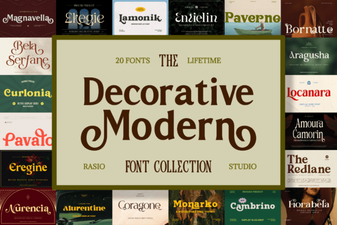 Stylish Decorative Fonts for Modern Design Projects
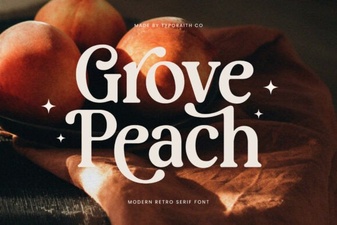 Grove Peach Font: Elegant & Versatile Design
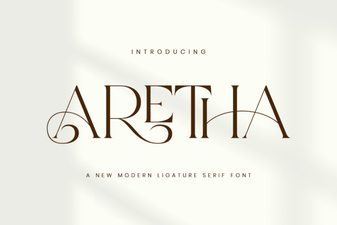 Aretha Font: Elegant & Versatile Design Inspiration
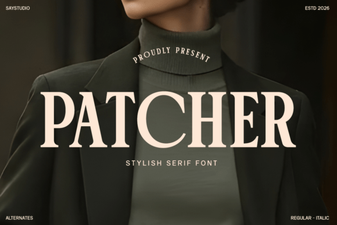 Patcher Font: Creative Typography for Design Projects
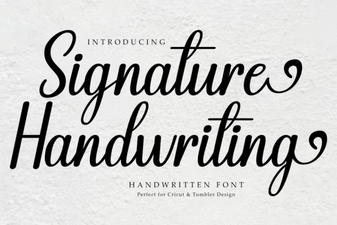 Signature Handwriting Font for Creative Projects
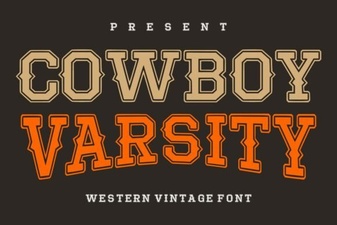 Cowboy Varsity Font: Bold & Playful Design Ideas